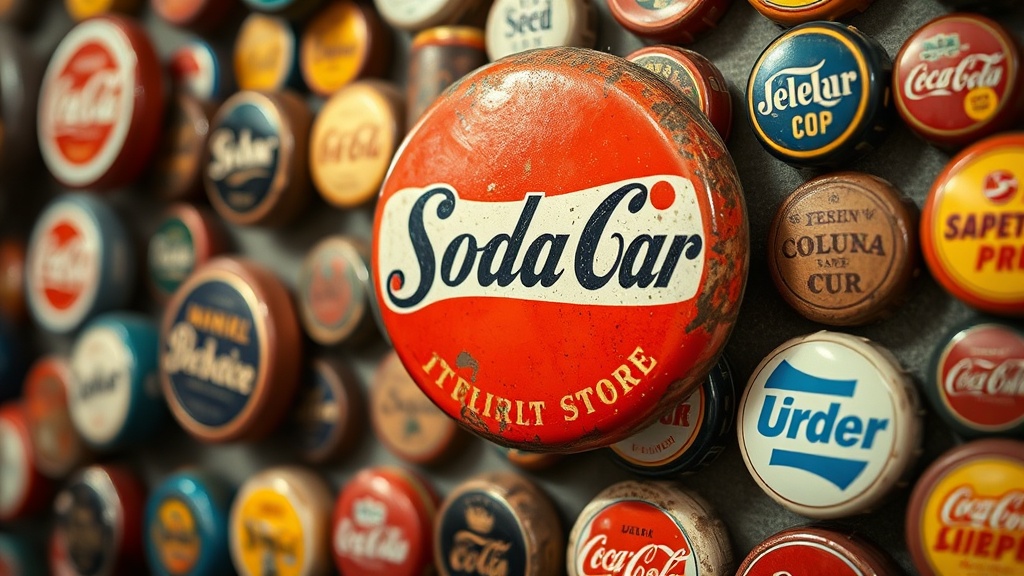
Sourcing Rare Vintage Soda Caps at Estate Sales

Have you ever wondered why the best vintage soda caps are rarely found in thrift stores or online auctions? Estate sales offer a high-stakes environment where collectors can find genuine relics from the mid-century era, but you need a strategy to spot them before someone else does. This guide breaks down how to identify high-value metal caps, what to look for in estate sale catalogs, and how to handle your finds to ensure they don't degrade immediately.
How Do I Identify Valuable Vintage Soda Caps at Estate Sales?
You identify valuable vintage soda caps by looking for specific hallmarks like heavy metal weight, unique embossing, and the absence of modern plastic coatings. Most high-value items in this niche are made of steel or aluminum and feature distinct branding from the 1940s through the 1970s. You aren't just looking for any cap; you're looking for specific brands like Coca-Cola, Pepsi-Cola, or regional soda brands that have high collector demand.
When you're scanning a pile of miscellaneous metal items, keep an eye out for "crown corks." These are the classic, crimped-edge caps that define the vintage era. A modern bottle cap is often thin and lightweight, but a true vintage piece has a certain heft to it. If a cap feels flimsy or looks like it has a plastic liner inside, it's likely a much newer production.
Check the rim. A clean, sharp crimp often indicates a better-preserved specimen. If the metal is jagged or looks like it was forced open with pliers, the value drops significantly. Collectors want the "unopened" look—even if the bottle is long gone.
Look for these specific indicators of value:
- Brand Recognition: Iconic names like Coca-Cola or Dr Pepper often command higher prices.
- Regionality: Local soda brands from the 1950s that no longer exist are gold mines.
- Condition: Minimal rust and intact color are the holy grails.
- Material: Solid steel or heavy aluminum over plastic-lined modern versions.
Don't forget to check the underside. Sometimes the most interesting markings are on the bottom of the cap, which can tell you about the manufacturing process or the specific bottling plant. This is where you find the "hidden" details that prove authenticity.
What Should I Look for in an Estate Sale Catalog?
Look for keywords like "vintage metalware," "advertising collectibles," or "antique beverage accessories" to find soda cap-related items. Most estate sale organizers won't list "soda caps" specifically because they don't realize the value of small, loose items. They usually group them under much broader, less exciting categories.
When you're browsing a digital catalog or a physical flyer, don't just look for the word "bottle cap." You need to look for the context. If a sale mentions a "collector of vintage advertising" or "antique soda fountain equipment," that is your signal to show up. These sales are often more curated and contain higher-quality pieces than a standard garage sale.
Keep an eye out for terms like:
- Vintage Americana
- Soda Fountain Memorabilia
- Metal Advertising
- Antique Glass and Metalware
A quick tip: if the catalog mentions a "large collection of various metal items," there is a high probability that a jar of loose caps is buried in one of those boxes. It's a bit of a gamble, but that's where the real wins happen. You might find a rare 1950s soda cap hiding under a pile of old coins or rusted tools.
If you find a jar of loose caps, don't be afraid to ask the organizer if you can look through it. Sometimes, they'll even let you buy the whole jar for a flat fee. This is often much cheaper than buying individual pieces online.
| Search Term | Likelihood of Finding Caps | Why It Matters |
|---|---|---|
| "Antique Advertising" | High | Often includes soda-related memorabilia. |
| "Vintage Metalware" | Medium | Caps are often sorted with this category. |
| "Glassware Collection" | Medium | Bottles and caps are frequently found together. |
| "Estate Sale - General" | Low | Requires more physical searching on-site. |
How Can I Prevent Damage to My New Finds?
Prevent damage by storing your caps in a dry, temperature-controlled environment and avoiding direct contact with moisture. The biggest enemy of a vintage metal cap is oxidation. If you find a cap that has a bit of surface rust, don't panic—but do act quickly.
The moment you bring a piece home from an estate sale, you need to assess its state of preservation. If it's damp or has been sitting in a humid basement, it needs to be dried and stabilized. A single drop of moisture can start a chain reaction of rust.
If you're worried about the longevity of your collection, you should read up on oxidation processes to understand how metal reacts to the environment. It’s not just about aesthetics; it's about preserving the history of the piece. For more specific advice on keeping your pieces looking pristine, check out my guide on protecting your metal caps from rust and oxidation.
Here is a simple post-purchase checklist for your new finds:
- Inspect: Look for any signs of active rust or peeling paint.
- Clean: Use a dry, soft cloth to remove dust or debris. Never use harsh chemicals unless you know exactly what they do to the metal.
- Stabilize: If there is light rust, a tiny amount of specialized metal cleaner might help, but proceed with caution.
- Store: Place in a display case or a dry, airtight container.
A lot of people make the mistake of cleaning their caps with water immediately. This is a mistake. Water can actually accelerate the rusting process if the metal is porous or has a thin coating. Always use dry methods first.
Once you have a stable collection, you'll want to think about how to present it. A well-organized collection looks much better than a pile of loose metal. I've written a detailed piece on displaying and preserving your soda cap collection if you want to move from a "hunter" to a "curator."
One thing to remember: the more "raw" and untouched a piece looks, the more valuable it often is to certain types of collectors. If you over-clean a vintage cap, you might actually strip away the very patina that proves its age. Proceed with care.
The most important thing to remember when hunting at estate sales is patience. You won't find a rare 1930s Pepsi cap every single weekend. You have to be willing to dig through the "junk" to find the gems. It's a skill that improves the more you do it.
Keep your eyes peeled for the small stuff. The most valuable things in an estate sale are often the smallest, and they are usually the easiest to overlook. Good luck out there!