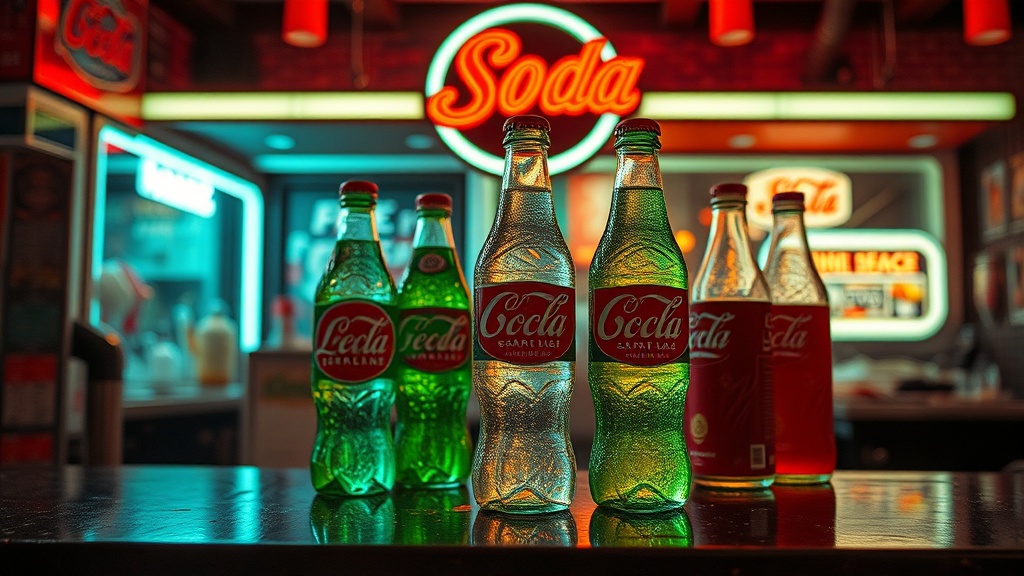
Legendary Soda Brands That Defined an Era

The Golden Age of Cola Giants
The Rise of Fruit Soda Innovators
Niche Regional Brands and Their Legacy
Ever wondered why certain soda brands seem to command higher prices at auctions than others? This post breaks down the legendary brands that defined the soda industry through their iconic packaging, from vintage glass bottles to the metal caps that collectors hunt for today. We'll look at the specific design elements that make these brands legendary and why certain eras are more profitable for collectors.
Why are vintage soda bottles more valuable than modern ones?
Vintage soda bottles are often more valuable because they represent limited production runs, unique glass colors, and historical manufacturing methods that aren't used today. Collectors aren't just buying a bottle; they're buying a piece of history. A clear glass bottle from the 1950s might be common, but a cobalt blue or an amber glass bottle from a defunct regional brand can drive prices up significantly.
The value often hinges on the "seal." For many of us in the community, the seal—whether it's a crown cap or a specialized stopper—is where the real history lies. If you're looking at a bottle from the early 20th century, you might find a specialized closure that is incredibly rare. This is why glass bottle history is such a deep rabbit hole.
Take Coca-Cola, for example. Their iconic contour bottle didn't just happen by accident. It was a calculated design choice to ensure brand recognition even if someone found a broken piece in the dark. That level of branding is what makes a brand "legendary" in the eyes of a collector. It's about the silhouette. It's about the way the light hits the glass.
The Big Three: Coca-Cola, Pepsi, and Dr Pepper
These three brands have dominated the market for decades, but they each have very different "collectibility" profiles. If you're hunting at flea markets, you'll notice a pattern in what they produce.
- Coca-Cola: The gold standard for collectors. Their variety of glass shapes and the evolution of their red-and-white logo make them a staple. You'll find everything from heavy stoneware-style bottles to sleek modern glass.
- Pepsi: Often seen as the "challenger" brand, Pepsi's history is filled with bold, experimental packaging. Their mid-century designs are particularly popular among those who collect colorful, bright aesthetics.
- Dr Pepper: A bit of an outlier. Because it wasn't always part of the "Cola Wars" in the same way, their specialized vintage branding can sometimes be harder to find, making it a high-value target for serious enthusiasts.
Don't forget about the smaller, regional players. A brand like Moxie or RC Cola might not have the global footprint of Coke, but for a niche collector, a well-preserved RC Cola metal cap is a prize. Sometimes, the smaller the brand, the more intense the following. It's a weird way the market works (but that's why we love it).
What makes a soda cap a "rare" find?
A soda cap is considered rare if it features a specific material, a limited-edition design, or a manufacturing error that makes it unique. For collectors of "smalls," the distinction between a standard crown cap and a rare variation is everything. Most people see a piece of discarded metal, but we see a specific year or a specific bottling plant.
Material is a huge factor here. Most modern caps are made of steel, but older versions used different alloys. If you are serious about preserving these, you'll want to know about sorting your soda caps by metal type to ensure they don't rust or lose value. A rusted cap is a sad sight for any collector.
Here is a quick breakdown of what to look for when evaluating the rarity of a cap:
| Feature | Commonality | Collector Value |
|---|---|---|
| Standard Steel Crown | High | Low |
| Aluminum Sided | Medium | Moderate |
| Limited Edition Graphics | Low | High |
| Error/Misprint | Very Low | Very High |
I've seen collectors spend hundreds of dollars on a single "error" cap. An error might be a slightly off-center logo or a color bleed that shouldn't exist. It's a game of precision. You have to look closely. If you aren't looking closely, you'll miss the gems. It's also vital to know how to spot reproduction soda caps because the market is flooded with fakes that look "vintage" but are actually modern imitations.
The Era of the "Niche" Brand
During the 1950s and 60s, the soda industry exploded with regional flavors and local brands. These brands often had very specific, localized-style branding. They weren't trying to be global; they were trying to be the best in their town. This created a massive variety of packaging that is now highly sought after. If you find an old bottle from a defunct soda company in the Midwest, you've hit a gold mine for a specific type of collector.
These brands often used much heavier glass. The weight alone tells you a lot about the era. Modern glass is thin, light, and cheap. Vintage glass has a presence. It feels substantial in your hand. This is part of the charm of the hobby.
How much does a rare soda bottle cost?
The cost of a rare soda bottle varies wildly based on its condition, its age, and the rarity of the specific design. A common 1980s Coke bottle might only be worth a few dollars, but a 19th-century glass soda bottle with a hand-blown aesthetic can fetch hundreds—or even thousands—at a specialized auction. It depends entirely on the "who, what, and where."
If you're looking at the high end, you're looking at museum-quality pieces. We're talking about pre-industrial glass or bottles with original cork stoppers. On the other hand, if you're just starting out, you'll find plenty of affordable "legendary" brands that are easy to collect. You don't need a massive budget to start building a collection that looks impressive on a shelf.
One thing to keep in mind is the "condition" factor. A bottle with a chip in the rim or a crack in the base is significantly less valuable. This is especially true for display-grade items. If you're displaying your collection, I highly recommend looking into selecting the best display cases to keep your items protected from dust and physical damage. A scratched bottle is a scratched profit margin.
The Value of "Small" Collectibles
While bottles get the glory, the "smalls"—the caps, the pull-tabs, the small metal pieces—are the backbone of the community. These items are easier to store and easier to ship. They also allow for much more granular collecting. You can specialize in just the metal-type of a specific brand's cap, or focus on the color variations of a single era.
The value in these items is often found in the details. A tiny change in the font or a slightly different shade of blue on a cap can be the difference between a common item and a collector's prize. It's a meticulous hobby. It requires a keen eye and a lot of patience.
The history of these brands is written in their packaging. Whether it's the heavy glass of a 1920s soda or the colorful metal of a 1970s pop bottle, these items tell a story of changing tastes, changing technology, and changing culture. Keep hunting. You never know what you'll find in the bottom of a local thrift store bin or at a garage sale.