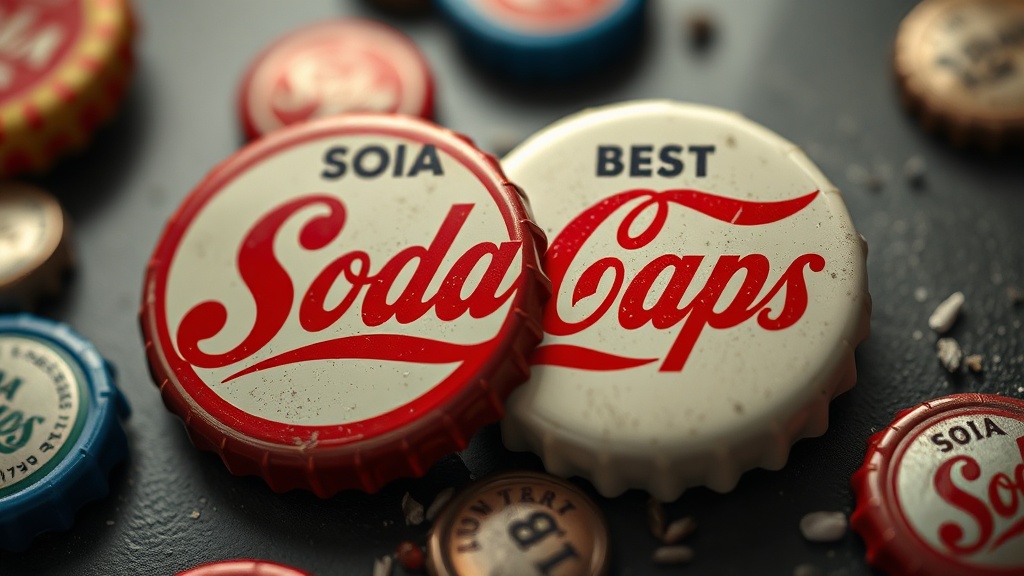
How to Spot Reproduction Soda Caps Before You Buy or Trade

This guide shows you how to tell a real older soda cap from a fresh reproduction before you trade, buy, or hit Bid Now. You’ll learn what the liner says about age, how the crimp should look, which kinds of wear make sense, and how to read listing photos when the seller gives you almost nothing to work with. That matters because caps can jump from dime-box filler to an expensive mistake fast, and the people making copies know collectors love bright color and tidy stories.
Not every reproduction is dishonest. Some are souvenir pieces, some are modern commemoratives, and some are fantasy designs that never claimed to be old in the first place. The problem starts when a newer cap is offered as vintage, rare, or “old bottler stock” without proof. In our corner of collecting, that happens more often than people like to admit.
Why are reproduction soda caps getting harder to spot?
Modern printing is sharper, small-batch manufacturing is cheap, and sellers know exactly which brands draw attention. A copy from twenty years ago often looked obviously wrong. A copy made now can get surprisingly close at a glance, especially in online photos where glare hides the liner and the edge never gets shown.
Collectors also create a lot of confusion for themselves. We want the clean story: closed factory, forgotten case, perfect cap. But a cap that looks too fresh for its claimed age deserves more scrutiny, not less. If the story sounds older than the metal looks, slow down.
If a seller won’t show the liner, I treat that as a problem, not a mystery.
What should you check first when the cap is in your hand?
Start underneath. Most newer collectors stare at the logo side first because that is where the excitement lives. The underside is where the truth usually shows up.
1. Look at the liner before the paint
Older soda caps often used cork or cork-backed liners, and those materials age in uneven, believable ways. You may see drying, compression, darkening around the center, or a slightly crumbly texture at the edges. Later liners moved into plastic compounds and more uniform inserts. That does not mean every plastic liner is new or every cork liner is old, but it gives you a starting point.
What you do want to avoid is a liner that looks spotless, bright, and mechanically perfect while the seller is calling the cap mid-century. That mismatch matters. Honest age tends to leave some evidence behind. Even unused caps stored well usually pick up a little toning, a faint ring where pressure sat for years, or minor dullness around the inner edge.
2. Read the crimp and edge profile
The edge tells you how the cap was formed and how it has lived since then. On many older examples, the crimps feel slightly softened by time, handling, or long storage in stacked trays. They are still defined, just not knife-clean. Reproductions often arrive with a very sharp, uniform edge and a finish that feels newly stamped. That does not convict the cap on its own, though it should push you to keep checking.
Turn the cap sideways and look for wear that matches real contact. Authentic older caps usually show tiny rubs on the high points of the crimps, not random distress sprayed across the whole rim. Fake aging often looks theatrical: too even, too brown, too eager to impress. Real wear is boring. That is part of why it works.
3. Check print registration and surface finish
Vintage caps were mass-produced, but they were not miracles. Lettering can be slightly off-center. Borders may drift a hair. Metallic inks may mute with time. On reproductions, the print can look almost too clean, with modern saturation and a flat, digital feel that does not sit right on metal. If every line is hard-edged and every color pops like it was printed last week, ask harder questions.
Surface sheen helps here. Older caps often lose their flash in uneven ways. You might see soft gloss in protected areas and duller spots where friction did its work. A reproduction aged by hand can miss that pattern and end up looking uniformly scuffed from edge to edge.
4. Make sure the wear tells one story
Good inspection is really a consistency test. Does the front wear match the underside? Does the edge age match the liner age? Does the claimed era match the brand style? When all three line up, confidence goes up. When one part looks fifty years old and another looks six months old, stop romanticizing it.
- Green flag: minor rub on crimp tips, modest liner darkening, slightly muted ink.
- Yellow flag: very clean front, believable underside, but no side photos and vague dating.
- Red flag: bright new liner, dramatic fake rust, and a seller story doing all the heavy lifting.
How can you judge a cap from listing photos alone?
You can’t judge perfectly from photos, but you can lower your odds of buying a bad piece. Start by checking whether the seller has shown three views: front, underside, and side angle. If one is missing, ask for it. A serious seller should not treat that like a strange request.
When you zoom in, ignore the logo first and study the metal around it. Look at the edge for clean factory sharpness. Look at the underside for liner texture. Look for rust that sits where moisture would actually gather rather than where drama looks best in a listing thumbnail. Real age often hides in small, uneven signals. Fake age likes symmetry.
These are the questions I’d ask before buying from photos:
- Can you show the liner straight on?
- Can you add one photo of the cap edge from the side?
- Do you know where the cap came from?
- Has it been cleaned or coated?
- Can you photograph it beside another known older cap for comparison?
If the answers are thin, price the uncertainty in. A maybe-cap should not be bought at proven-cap money. That sounds obvious, yet collectors talk themselves out of that discipline every week.
Which brand clues actually help date a soda cap?
Brand history is useful, but only if you use it carefully. Logos changed. Slogans changed. Bottlers adapted artwork locally. A cap that carries a script or color combination that arrived decades later than the seller claims should make you pause, even if the metal itself looks convincing.
For broad timeline checks, I like using official company history pages first, then trademark records. The Coca-Cola Company history page and PepsiCo’s history archive are useful for checking when certain branding eras appeared. If a seller dates a cap to the 1930s but the typography fits a much later corporate style, you’ve learned something important.
When you need to go deeper, the USPTO trademark search can help you see when a word mark, slogan, or design element entered official use. It is not a one-click answer, and local bottlers muddy the picture, but it gives you a firmer base than wishful thinking.
The trap here is overconfidence. National brand timelines do not settle every regional cap. Small bottlers often used transitional art, old stock, or slightly odd layouts. So use brand clues as a cross-check, not as the entire case. The cap still has to make physical sense in your hand.
A six-minute pre-buy routine
When I’m standing at a market table or scanning an auction listing, I run the same routine every time. It keeps me from making the fast, sentimental buy that usually turns into regret.
- Flip it over first. Give the liner ten full seconds before you reward the front design with your attention.
- Study the edge. Look for believable handling wear, not decorative distress.
- Check print quality. Ask whether the color, registration, and sheen fit the claimed age.
- Compare the story. Origin, storage, and condition should make sense together.
- Verify the brand era. Use official history pages and trademark records when the date matters to value.
- Price the doubt. If two questions remain unanswered, buy as a placeholder or walk away.
That last step is where people usually wobble. They’ve already imagined the cap in the tray, so they start negotiating against themselves. Don’t. A clean pass is part of collecting well. There will be another orange crush, another cola crown, another small-town bottler piece. There won’t always be another chance to keep your standards intact.
The next time a seller tells you a cap is “definitely old,” do the boring checks first. Flip it over. Read the liner. Look at the edge. Make the piece earn your confidence before it earns a space in the collection.