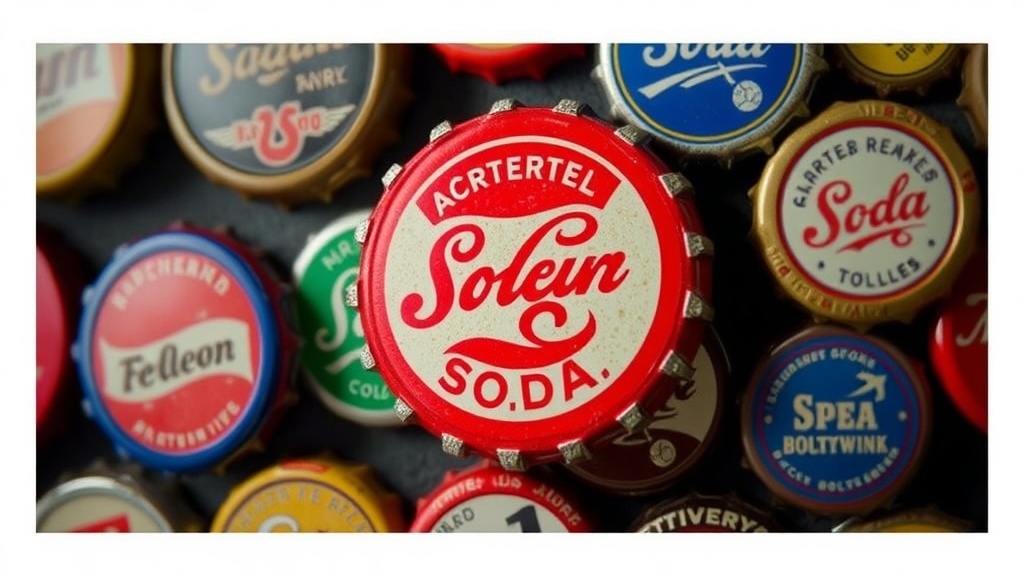
The Ultimate Guide to Collecting Vintage Soda Bottle Caps

What Makes Vintage Soda Bottle Caps Worth Collecting?
Vintage soda bottle caps represent one of the most accessible entry points into the world of collectibles—small, colorful, and steeped in Americana. This guide covers everything from identifying valuable caps to proper storage techniques, grading systems, and where to find hidden gems. Whether you're starting a new collection or looking to expand an existing one, you'll find practical strategies for building something meaningful without breaking the bank.
What Are the Most Valuable Vintage Soda Bottle Caps?
The most valuable vintage soda bottle caps typically date from the 1930s through the 1950s and feature rare designs, limited-run promotions, or caps from defunct regional bottlers. Early cork-lined caps command premium prices, especially those with vibrant graphics intact.
Certain categories consistently attract serious collectors. Pre-1960s Coca-Cola caps with unique city markings can sell for $50 to $200 depending on condition. Pepsi's early "Pepsi-Cola" script caps from the 1940s and 1950s remain highly sought after. Regional sodas like Moxie, Dr. Pepper (before national distribution), and small-town bottlers often fetch surprising premiums—the scarcer the bottler, the higher the demand.
The catch? Condition matters enormously. A rare cap with significant rust or a damaged liner might be worth a fraction of what a pristine example commands. Serious collectors use a grading scale similar to coin collecting:
- Mint (M): Perfect condition, no flaws, liner intact, no rust
- Near Mint (NM): Minor imperfections visible only under close inspection
- Excellent (EX): Light wear, minor scratches, liner may show slight deterioration
- Very Good (VG): Moderate wear, visible scratches, possible light rust spots
- Good (G): Heavy wear, significant rust, damaged or missing liner
Here's the thing about grading—it's somewhat subjective. Two experienced collectors might disagree on whether a cap merits "Excellent" or "Very Good." That said, major auction houses and established dealers generally follow similar standards. When buying online, always request detailed photos rather than relying solely on written descriptions.
Where Can You Find Vintage Soda Bottle Caps?
Finding quality vintage soda bottle caps requires knowing where to look—and patience. The best sources include estate sales, antique shops, specialized bottle shows, online marketplaces, and direct relationships with other collectors.
Estate sales in older neighborhoods often yield unexpected treasures. Look for sales advertising "bottle collections," "basement cleanouts," or "vintage advertising." The Midwest and Southeast United States—regions with strong soda bottling histories—tend to produce better finds than areas where bottling was less concentrated.
Online platforms have transformed the hobby. eBay remains the largest marketplace, though prices often reflect retail rather than wholesale values. Facebook collector groups offer better deals for those willing to build relationships. Specialized sites like Bottle Cap Auctions cater specifically to serious collectors.
Worth noting: buying lots (bulk collections) typically offers better value than individual purchases. A jar of mixed caps purchased for $30 might contain two or three valuable pieces worth significantly more. The rest become trade fodder—a currency every collector needs.
| Source | Pros | Cons | Best For |
|---|---|---|---|
| Estate Sales | Low prices, authentic finds | Inconsistent availability, time investment | Experienced collectors who enjoy hunting |
| eBay | Vast selection, buyer protection | Higher prices, shipping costs, condition surprises | Specific wants, rare caps |
| Bottle Shows | See items in person, network | Travel required, limited schedule | High-value purchases, building relationships |
| Collector Groups | Fair prices, trade opportunities | Requires trust, payment methods vary | Regular acquisitions, community building |
| Antique Shops | Immediate purchase, curated selection | Markups can be steep, limited soda focus | Impulse buys, decorative pieces |
How Should You Store and Display Your Collection?
Proper storage protects your investment while keeping caps accessible for enjoyment. The golden rules are simple: keep caps dry, away from direct sunlight, and in stable temperature conditions.
Humidity represents the biggest threat. Rust develops quickly in damp environments, destroying both appearance and value. Basements and attics—tempting storage spaces—often create problems. A closet in a climate-controlled living space works far better.
For display, several options exist depending on your goals and space:
- Plastic pages with pockets — Similar to trading card pages, these fit in standard three-ring binders. They're affordable and allow easy browsing.
- Stackable storage boxes — Acid-free cardboard boxes with dividers work well for larger collections. Label each section by brand, region, or era.
- Display frames with foam backing — Perfect for showcasing favorites. The foam holds caps securely while allowing rearrangement.
- Glass jars — Atmospheric and nostalgic, though less protective. Best for common caps rather than valuable specimens.
That said, never store cork-lined caps in airtight containers long-term. Cork needs some air circulation to prevent mold and deterioration. For truly valuable pieces, individual archival-quality plastic sleeves offer the best protection.
What Tools and Supplies Do Serious Collectors Need?
Beyond caps themselves, a modest investment in tools makes collecting more enjoyable and profitable. You don't need much—but the right equipment prevents costly mistakes.
A good 10x loupe (magnifier) helps examine details, spot reproductions, and assess condition accurately. The Bausch & Lomb Hastings Triplet remains the standard among serious collectors—it's not cheap, but it's the difference between guessing and knowing.
Reference materials prove invaluable. The Standard Catalog of Vintage Soda Bottle Caps (published periodically with updates) provides pricing guidance and identification help. Older editions still serve well for identifying caps, though prices have shifted.
Other useful items include:
- Digital scale — Weighing caps helps identify reproductions (modern caps often weigh differently)
- pH testing strips — For testing storage materials; anything acidic will damage caps over time
- Soft cotton gloves — Handling valuable caps without transferring oils from your skin
- LED desk lamp — Bright, adjustable lighting for examining details
How Do You Identify Reproductions and Fakes?
The vintage soda bottle cap market—like any collectible field—attracts unscrupulous sellers. Learning to spot reproductions protects both your wallet and your collection's integrity.
Modern reproductions typically betray themselves through several telltale signs. The metal composition differs—vintage caps used steel with specific coatings, while reproductions often use thinner, cheaper materials. Print quality varies too; modern digital printing looks different under magnification than vintage lithography.
Here's the thing about cork liners: they're nearly impossible to fake convincingly. Reproduction caps almost always use modern plastic or foam liners. If you're examining a supposedly 1940s cap with a pristine white foam liner, something's wrong.
Reputable dealers stand behind their merchandise. Ask questions. Request provenance when buying expensive pieces. Any seller who becomes defensive or evasive when asked about authenticity should raise red flags. The best protection is knowledge—handle authentic pieces whenever possible, learn the feel and appearance of genuine vintage caps, and trust your instincts when something seems off.
"The best way to spot a fake is to know the real thing intimately. Handle thousands of authentic caps, and reproductions announce themselves." — Veteran collector wisdom from the Bottle Cap Collectors Association
Building Community: Why Collecting Is Better Together
Soda bottle cap collecting thrives on connections. While the hunt can feel solitary, the community surrounding this hobby adds dimension that transforms accumulation into genuine collecting.
Regional clubs organize swaps, shows, and educational events. The Bottle Cap Collectors Association maintains directories of local chapters and publishes a quarterly newsletter. Annual conventions bring together collectors from across North America—three days of trading, seminars, and camaraderie.
Online communities matter too. Reddit's r/bottlecaps subreddit offers quick identification help. Facebook groups range from general interest to hyper-specific (Coca-Cola caps only, 1950s regional sodas, Canadian bottlers). Instagram has spawned a vibrant collector community sharing finds and collection photos.
The real value of community isn't just social—it's practical. Fellow collectors become trading partners, mentors, and friends. Someone in Texas might have dozens of Maritime Canada caps they'd trade for your surplus Southwestern finds. These relationships built over years yield better acquisitions than any amount of cash.
Start simply. Attend one local show. Join one online group. Introduce yourself and share what interests you. The community rewards genuine enthusiasm and reciprocity. Before long, you'll find yourself helping newcomers—the cycle continues, and the hobby grows stronger.