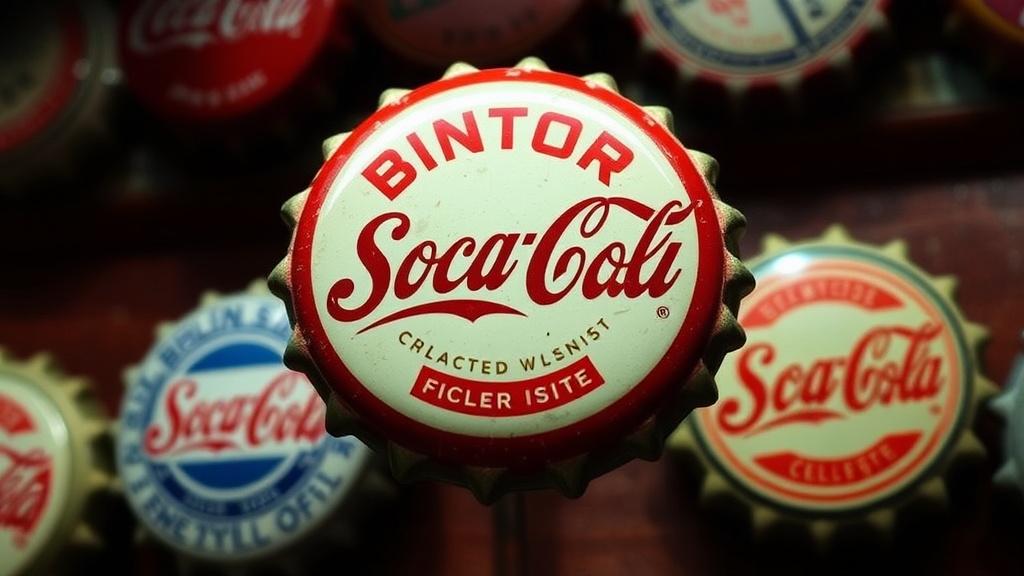
5 Surprising Facts About Vintage Soda Caps Every Collector Should Know

Cork Liners Were the Gold Standard Before the 1960s
Rare Misprints Can Be Worth Hundreds of Dollars
Soda Caps Were Once Used as Promotional Currency
The First Crown Caps Were Invented in 1892
UV Light Is the Silent Enemy of Colorful Caps
Vintage soda caps carry more history than most people expect. This post covers five surprising facts about bottle cap collecting—from spotting authentic cork liners to understanding why a scrap of metal can sell for hundreds of dollars. Whether you're sorting through a shoebox of flea market finds or bidding on a rare Crown Cork & Seal variant, these details will help you build a sharper, more valuable collection.
How Can You Tell If a Bottle Cap Is Truly Vintage?
A genuine vintage bottle cap almost always has a cork liner if it was produced before the 1960s. William Painter invented the crown cork in 1892, and for nearly seventy years, that familiar crimped cap sealed bottles with a disc of natural cork inside. The switch to plastic foam liners didn't happen overnight. Coca-Cola bottlers in North America were still using cork through the late 1950s in some regions, so the liner material is one of the fastest ways to date a cap.
Here's the thing—not every old cap has a pristine cork disc. Heat, moisture, and acidic soda can turn cork into crumbly brown dust. If you spot a cap with the cork intact and the logo crisp, you've found something special. That said, don't assume plastic foam means modern. Some European bottlers held onto cork liners into the early 1970s. Check the underside with a jeweler's loupe. Real cork has a fibrous, uneven texture. Plastic foam looks uniform and often has tiny visible bubbles. (Some collectors keep a known-cork reference cap in their kit just for side-by-side comparison.)
Why Do Some Soda Caps Sell for Hundreds of Dollars?
Soda caps can sell for hundreds of dollars when they feature factory printing errors, pristine uncapped condition, or rare color variations that never made it to mass production. A standard 1960s Pepsi cap might trade for a quarter at a Halifax flea market. The same cap with a double-struck logo or an off-center red, white, and blue shield? That's a different story. In 2022, a misprinted Dr Pepper cap from the Waco bottling plant sold for $340 at auction. The catch? Condition matters more than age. A beaten-up 1930s Coca-Cola cap with rust and bent edges might fetch $8. An uncapped 1970s Sprite cap with mirror-bright paint and zero dents can bring $45.
Collectors call this the "eye appeal premium," and it's real. Errors are only valuable when they're obvious. A slightly faded logo isn't an error—it's just wear. Worth noting: caps from defunct regional brands like Canada Dry's early Halifax bottlers or short-lived American sodas often outprice familiar names because so few survived. Scarcity plus condition equals heat in the marketplace.
Were Soda Caps Ever Used as Real Currency?
Yes—during the Great Depression and World War II, some soda caps were accepted as tokens or scrip in place of coins when metal currency was scarce. Regional bottlers printed caps with denominations like "5¢" or "Good for 1 Bottle" and local stores honored them. The practice wasn't universal, but it happened often enough in the American South and Midwest that surviving examples are now hotly pursued. A "Good For One Drink" Coca-Cola cap from a Louisiana bottler in 1933 recently traded hands for $180.
These caps weren't official government currency. They were promissory notes issued by bottling companies trying to keep customers loyal during hard times. The metal had to survive being carried in pockets alongside keys and coins, which is why early caps were stamped from thicker steel than many people expect. (Halifax didn't see the same scrip-caps phenomenon, but Maritime collectors still pay top dollar for American Depression-era pieces.) If you find a cap with printed text on both the top and the inside liner, inspect it closely—you might be holding a tiny piece of economic history.
What's the Best Way to Store Vintage Bottle Caps?
The best way to store vintage bottle caps is in acid-free cardboard boxes or polyethylene flips, kept flat, dry, and away from direct sunlight. Cork-lined caps are especially needy. Humidity above 60% will rot the cork and bloom rust on the steel skirt in as little as six months. Plastic foam liners fare better, but they can still glue themselves to glass jars or plastic bags over time. Never store caps in PVC vinyl pages. The softeners leach out and leave a greenish film on the metal.
If you're displaying a collection, consider a shadow box with UV-protective acrylic. For bulk storage, the BCW 2x2 cardboard holders work well—they keep caps separated and let you write notes on the flap. Here's a quick comparison of common storage options:
| Storage Method | Best For | Risk Level | Approximate Cost |
|---|---|---|---|
| Acid-Free Cardboard Box | Bulk cork-lined caps | Low | ~$15 |
| Polyethylene Flips | Individual showpieces | Very Low | ~$0.10 each |
| Glass Jar on a Shelf | Quick viewing | High (trapped moisture) | ~$5 |
| PVC Binder Pages | Nothing—avoid entirely | Very High | ~$8 |
| UV-Protected Shadow Box | Displaying prized finds | Low | ~$25–$40 |
That said, temperature swings can be just as damaging as humidity. A shed or garage in Halifax will freeze in January and bake in July—not ideal. Keep your collection indoors in a closet or drawer where the climate stays boring.
Are Reproduction Soda Caps Flooding the Market?
Reproduction soda caps have become shockingly common, especially for iconic brands like Coca-Cola, Pepsi, and 7-Up. Online marketplaces are loaded with "vintage-style" caps that look eighty years old but were stamped last year overseas. The metal is often too thin. The paint is too bright. And the cork—when present—is usually a single molded piece rather than a compressed natural disc. The differences are subtle until you've handled enough originals.
Not every reproduction is a scam. Some sellers clearly label them as novelty items. Others bury the word "replica" three paragraphs deep in a description. If a lot of twenty "rare" 1940s caps ships for $12 including postage, you're not looking at a miracle. You're looking at new metal. Buy from established dealers who guarantee authenticity. Ask questions. A legitimate seller will tell you exactly where a cap came from—often down to the bottling plant and year. Building relationships with trusted sources beats chasing bottom-dollar lots every time.
Collecting vintage soda caps is part science, part instinct, and part patience. The more you handle genuine pieces, the faster you'll spot the fakes, value the errors, and protect the gems. Start with what you can verify. Trade up when you're sure. And remember—every cap in your collection once sealed a bottle that somebody enjoyed on a hot afternoon decades ago. That's worth preserving.